
A swing stage is a work platform that hangs from the roof on wire ropes. Your facade, masonry or window crew uses the platform to work at different levels of the building. Hitech Sidewalk Shed & Scaffolding handles the rigging, repositioning and removal.
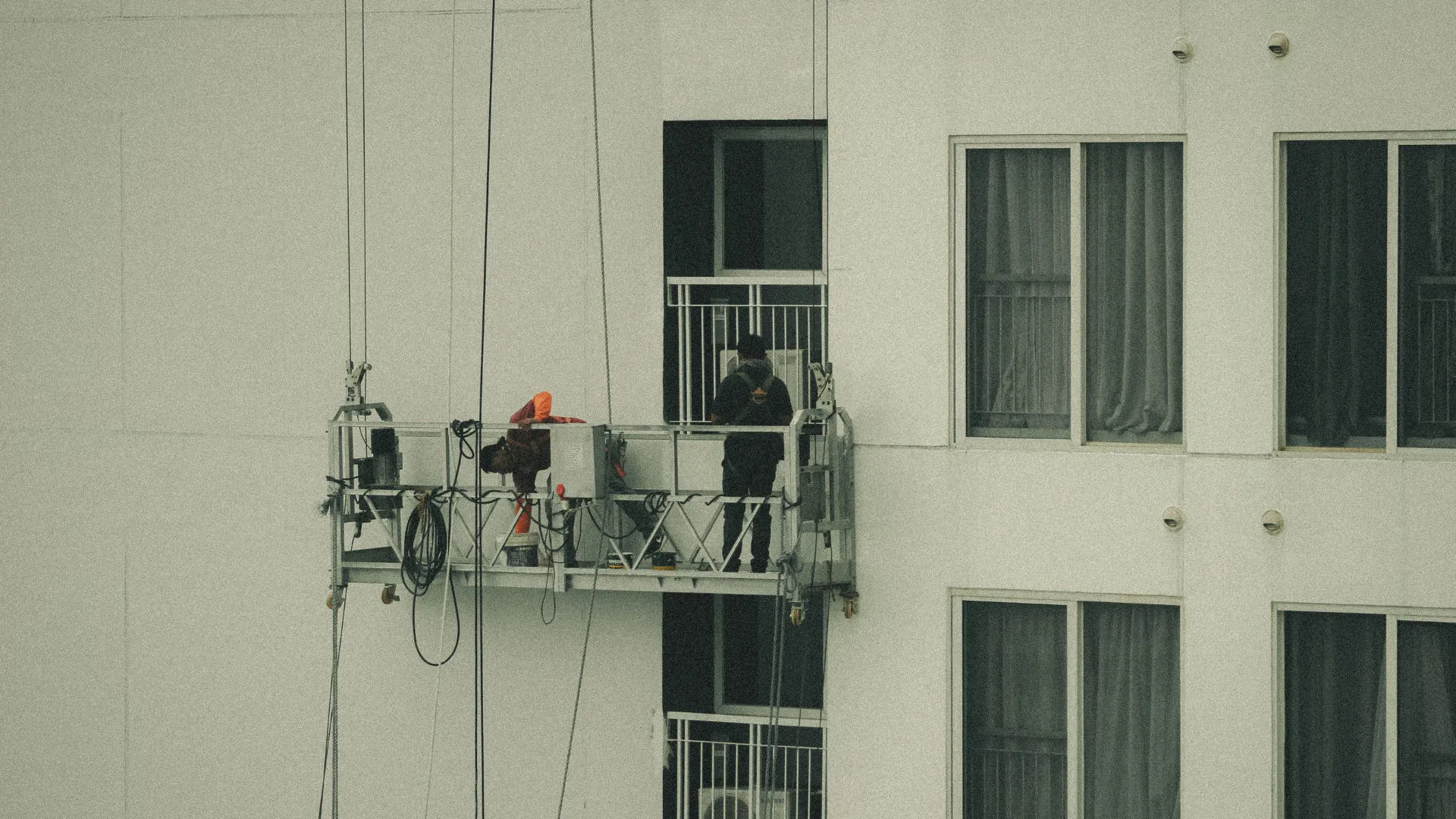
Suspended scaffolding is a platform that hangs from the roof or a setback. Wire ropes hold it. Hoists, powered or manual, move it up and down the wall. DOB calls it a hanging scaffold. Crews call it a swing stage.
The ropes attach to supports on the roof. DOB lists three types: outrigger beams, C-hooks and davit structures. We choose the type after we see your roof and parapet, and the scaffold design tells us how to secure each support. Some designs add tiebacks, which tie a support to a strong structural anchor. On most facade jobs, we hang the platform from two points, one rope at each end.
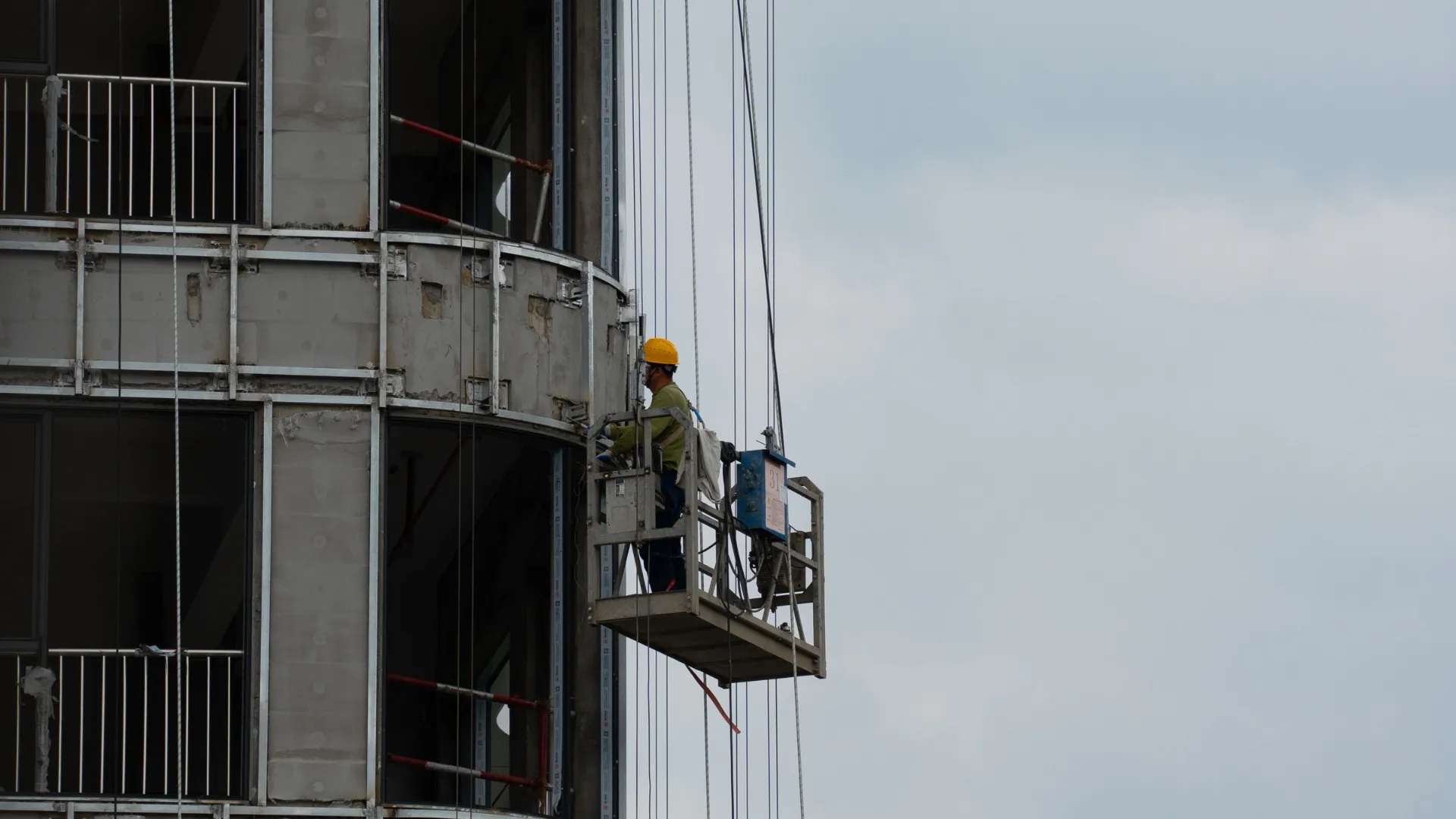
Use a swing stage for high facade work. The crew hangs the platform from the roof, so nothing has to rise from the sidewalk.
Swing stages handle window replacement, caulking, painting and masonry repair on upper floors. The platform moves with the crew, so they stay close to the wall at every floor. A FISP (Local Law 11) inspection may flag facade repairs. A swing stage can reach many of them, depending on the building and the repair.
On a tall building, scaffolding that starts at the sidewalk takes longer to build and blocks more of the street. A swing stage hangs from the roof and needs far less space below. That matters most on narrow sidewalks and in front of busy stores.
Some jobs need pipe scaffolding instead. Choose pipe scaffolding for low buildings, heavy masonry loads, or repairs across a whole elevation at once. We’ll tell you which one fits your building.
| Category | Swing stage | Pipe scaffold |
|---|---|---|
| Best for | Tall facade work | Low buildings, heavy masonry loads, whole-elevation work |
| Where it is built | Rigged from the roof | Built up from the ground |
| Space needed below | Far less | More of the sidewalk and street |
| Moves with the work | Yes, between drops | No, stays in place |
The DOB sets the rules for suspended scaffolds. Three of them decide who can work on yours: who supervises, how workers train, and what gets filed.
DOB’s suspended scaffold tips say a designated foreman, a licensed sign hanger or a licensed rigger must be on site at all times to supervise. The Building Code adds detail: a licensed rigger supervises the use of a suspended scaffold directly and continuously. The rigger can stay off site if a suspended scaffold foreman is on site and can talk to everyone using the scaffold. Sign-hanging work has its own exception, and so do some construction and demolition projects.
The rigger who erects the scaffold needs a DOB license.
Workers and foremen on suspended scaffolds need scaffold-specific training. They take courses from a DOB-approved provider:
Each worker must carry the required Certificate of Completion and Certificate of Fitness. The licensed rigger or sign hanger overseeing the job issues the Certificate of Fitness. Each foreman needs a DOB-issued ID card.
File new suspended-scaffold jobs in DOB NOW: Build under the Suspended Scaffold work type. For an adjustable suspended scaffold, DOB also requires a notification 24 to 48 hours before the first installation and again 24 to 48 hours before the final removal.
Moving the platform to a new drop on the same building doesn’t need a new notice. The applicant can be a licensed rigger, a licensed sign hanger or a registered design professional, depending on the work. Every suspended scaffold must also meet the NYC Construction Codes.
One Hitech Sidewalk Shed & Scaffolding team coordinates the job from rigging through removal. Need scaffolding that stands on the ground? See scaffolding rental NYC.
We start on your roof. We check the parapet, the spots where supports could go, the tieback options, and how we will carry equipment up. After the survey, we determine the rigging method and prepare the installation plan.
The crew sets the roof supports, hangs the platform, and moves it from drop to drop as the work crosses the facade. OSHA requires a competent person to inspect a suspended scaffold before every shift. Ours does that. NYC often requires a sidewalk shed below high facade work to protect pedestrians from falling debris. The required protection depends on the work and site conditions (DOB’s sidewalk shed rules), so we can build a sidewalk shed rental under the platform.
After the last drop, the same crew lowers the platform, takes down the roof supports, and clears the roof.
The crew that rigs your platform takes it down. You talk to one contact from start to finish.
Want to see the training cards before you hire us? Ask, and we’ll send them with your quote.
Six things set the price of a swing stage:
Send us the address, building height and roof details. We reply with a written quote the same business day.
A licensed rigger supervises the use of a suspended scaffold directly and continuously. The rigger can be off site if a suspended scaffold foreman is on site and can talk to everyone using the scaffold. Sign-hanging work and some construction and demolition projects have their own exceptions. The rigger who erects the scaffold needs a DOB license.
Workers take a DOB-approved 16-hour course, then an 8-hour refresher every four years. They also need a Certificate of Fitness from the licensed rigger or sign hanger who oversees the job. Supervisors take a 32-hour course, follow the same refresher cycle, and get a DOB-issued ID card.
Yes. File new suspended-scaffold jobs in DOB NOW: Build under the Suspended Scaffold work type. For adjustable suspended scaffolds, DOB also requires a notification 24 to 48 hours before the first installation and again 24 to 48 hours before the final removal.
Pick a suspended scaffold when the work sits high on a tall building and a ground-up scaffold would block the sidewalk. Pick pipe scaffolding for low buildings and heavy loads.
Cost depends on building height and number of drops, rigging method, hoist type, rental period, DOB filings and notifications, and the labour required for rigging, repositioning and removal.
Send the address, the building’s height or number of stories, the elevations that need work, your start date, and any roof access and parapet details you have.
Often, yes. NYC may require a sidewalk shed below high facade work to protect pedestrians from falling debris. Closing the area under the work to the public may be an alternative, depending on site conditions. We can build a sidewalk shed under the platform where required.
It depends on the building height, the roof access and the rigging method. We set the plan after the roof survey and give you the schedule with your written quote.
All five: Manhattan, Brooklyn, Queens, the Bronx and Staten Island.
Not sure your roof can take a rig? Call (929) 837-3852 and we’ll start with a roof survey.
Planning a facade job? Send us the address, the building height, and what you know about roof access. We’ll set up the roof survey. Need sheds, fencing or ground-up scaffolds? See all services.